
Sourdough Crackers
A great place to begin sourdough baking is with crackers or lavash. Every baker who keeps a starter alive has discard. Most of us hate to waste. Instead of tossing your discard away, simply add oil, salt and enough flour to create a soft dough. Most sourdough bread bakers obsess over getting a good rise, but you want crackers to be flat and these will be! Besides, SD discard makes these flatbreads much more flavourful.
Basic Dough
3.5 oz/100 g 100% hydration sourdough discard (SD)
1 Tbsp olive oil
1 tsp salt
2-4 heaping Tbsp flour
Dough add-ins
1/4 cup Blue Cheese or goat cheese, crumbled
2 Tbsp Sun-dried tomatoes
1/4 cup toasted walnuts, pecans, sunflowers or sesame seeds
1 Tbsp toasted cumin, coriander, ajwain, fennel or nigella
Chili flakes
Dried rosemary, thyme, sage or oregano
Roasted or finely chopped garlic
Top-ons
Flaky Vancouver Island or Maldon salt
Chili flakes
Once you have fed your starter, get ready to work with the discard or simply cover and leave in the fridge (up to 24 hrs) until you are ready to create cracker dough. Add olive oil, salt and two tablespoons of flour to the discard. Mix. Add more flour, little by little, until a dough forms and you can knead it in the bowl a few times.
Add-ins are all optional. Any add-in ingredients high in moisture, such as soft cheese or roasted garlic may require that more than 4 tablespoons of flour are added to make a dough.
Flour types will also affect dough formation. In general, cracker dough can take more processed white flour than it can whole or sifted grains, like rye, buckwheat, wheat, barley, cornmeal and spelt. The more you experiment with different flours and add-ins, the more you will learn about your dough and what you like in a cracker.
I like to add flaky salt and chill flakes as top-ons (even though the dough may contain both) for instant cracker-bite-appeal.
Rolling out cracker dough is easy. Lay out a piece of parchment paper on your counter and dust it and rolling pin with flour. Roll dough out as thinly as possible. Sprinkle over with top-ons if desired. Prick with a fork to create a regular pattern.
Bake on a baking sheet at 325 F for 15-30 minutes. A very thin cracker will cook faster than a thick one.
Your cracker is ready to take out of the oven when it is browning around the edges. Remove parchment and using oven gloves, pick it up and see if it bends and is pliable in the middle of a cracker sheet. If so, it needs more oven time. Sometimes I turn off the oven and leave the cracker sheet inside for an hour or so to really dry out. It’s a good sign if your sheet of dough has cracked in a few places and that may get you thinking about this product’s name.
Finally, how do you cut your crackers? I go with a rustic approach, breaking the baked cracker sheet or lavash into shards, serving in a tall glass. But you may want to use a pizza or ravioli cutter to cut the dough into triangles, rectangles or squares before baking. Ensure even baking by cutting all the shapes into similar shapes. Individually cut crackers will bake in 15-20 minutes.





 Dutch ovens or Lodge Pan combo cookers: When Jim Lahey of Sullivan St Bakery published his
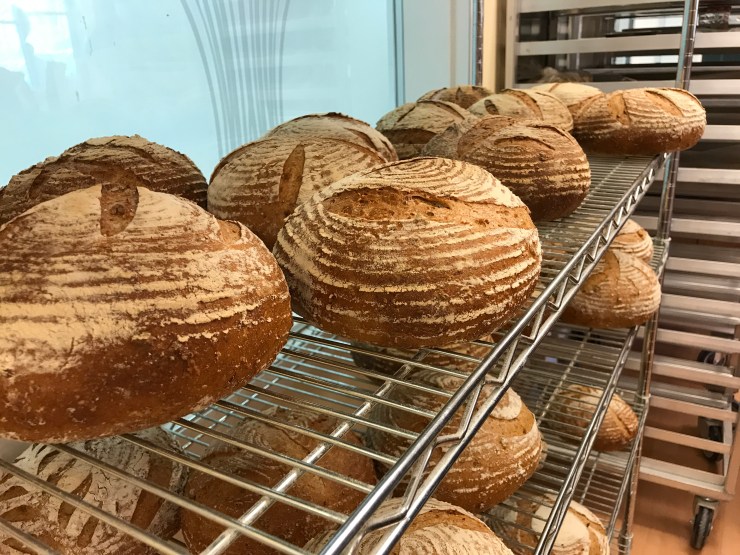
  Bannetons and baker’s linen: Artisanal bread dough is risen in baskets to preserve the shape and to create a pretty swirling flour pattern on the finished crust. You plunk the shaped loaf in bottom-side-up, let it rise, then place a parchment-paper-lined paddle or rimless baking sheet over it and flip the loaf back over, right side up. I dust my bannetons liberally with rice flour which prevents sticking and also creates nice, white contrasting lines on the finished crust. I never wash my bannetons, because moisture encourages mildew. I use a natural bristle brush to clean the bannetons and store them in a dry, airy cupboard. Round bannetons should be no wider than eight to nine inches in diameter or your loaf will be too big for the combo cooker. Another option is baker’s linen liners that can be fit over medium sized bowls.
 Razor blades and lamés: Just before your risen dough goes into the oven, it is time to score. A score allows hot air to emit during the bake without tearing open the crust. Bakers traditionally scored loaves in distinct patterns but nowadays it has become an art. The angle and depth of a score will affect the final shape of the loaf. I like to hold a slightly curved sharp blade between my thumb and index finger but others like to use a handle for the razor called a lamé. A sharp, serrated knife can do the trick, too.
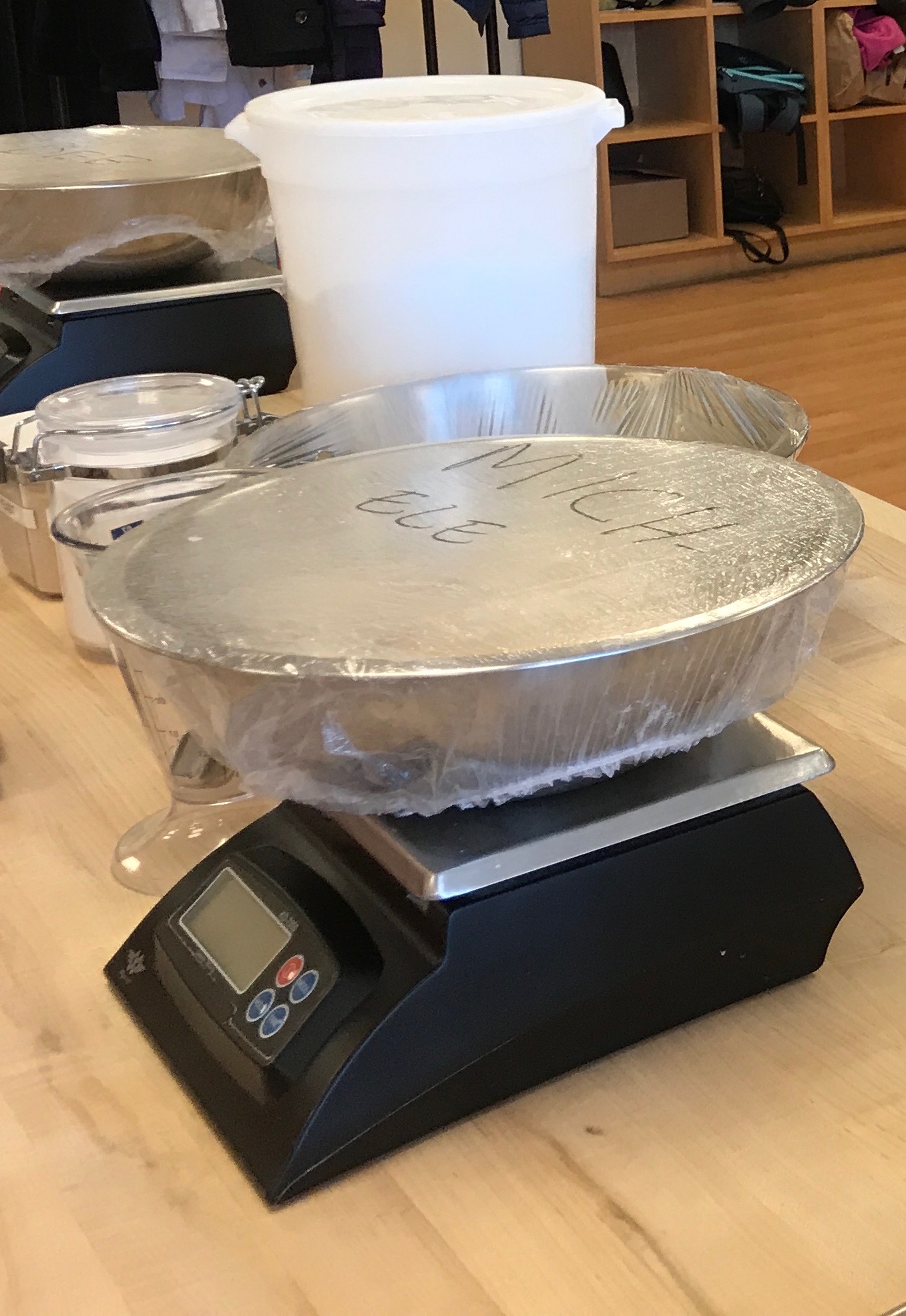
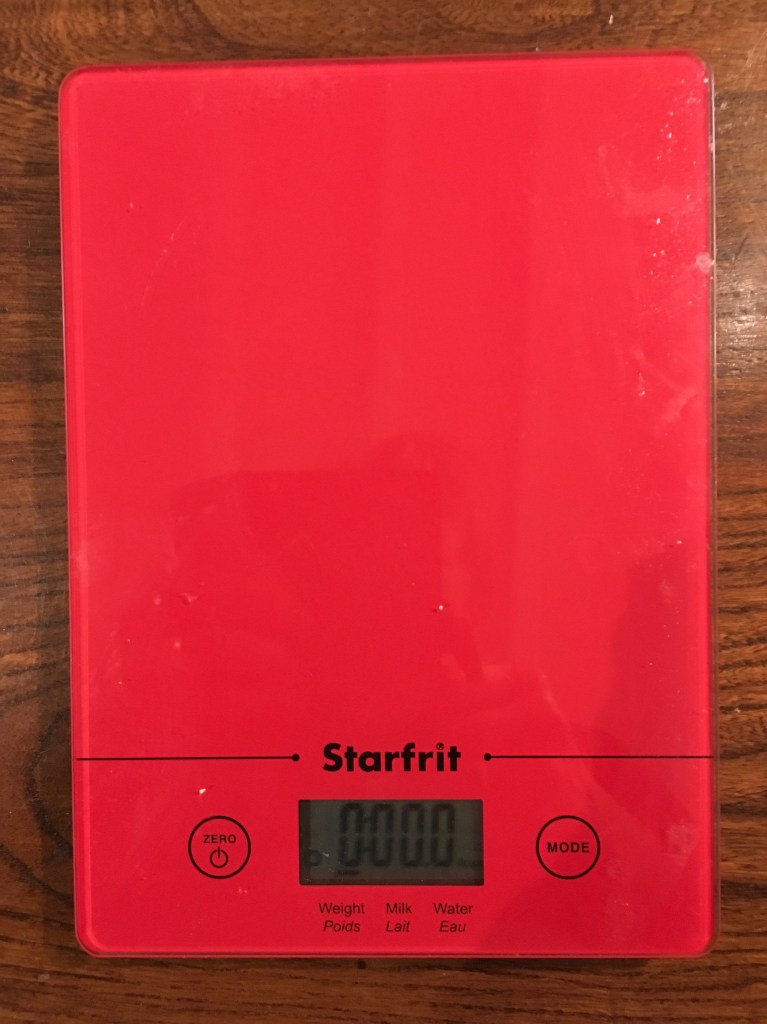 Digital scale: I cannot bake without a scale, I am so used to weighing versus measuring flour, starter and water. You need a scale that can “tare” back to zero so that you can put an empty bowl on the scale, tare to zero, add a pound of flour and tare back to zero, add 8 ounces of water and tare back to zero and so on. Zyliss makes a light, flat scale about the size of an Ipad.
 Just three ingredients: Flour, water and salt: Organic flour makes a big difference. I buy unbleached organic hard white flour by the 10 kg bag and am happiest when it is locally milled and has a date stamp to guarantee freshness. Locally grown, freshly milled whole rye, kamut, spelt and red fife all make incredible sourdough bread.
 Salt. Avoid iodized salt and choose sea salt. I like the big bags of coarse grey French salt from Ile de Noirmoutier that I found at Thrifty’s.
 Mado Food