Sometimes it just has to go cardamom in my kitchen. I start dreaming about flavour swaps and find my hands magically clutching a baggie of army-green pods from that crazy mishmash called my spice drawer. I hold the bag and … sigh.
No, I start cussing, wondering aloud if I have the cooking mojo in me to ferret out their cache. Will my cold, stiff fingers find the fortitude to single out each and every one of these tiny seeds that bear an uncanny resemblance to mouse turds?
Cardamom pods aren’t like those happy, smiling pistachio nuts, each cracked and cooperative. These babies are sealed shut like an exotic, perfumed temptress.
Thus, they bring out the pounder in me.
I’ve tried crushing them under my chef’s knife like garlic cloves – but lo, they slide and slither. I’ve grabbed a sheet of wax paper and hammered a rolling pin over them a few times, to absolutely no avail, except for a heap of shredded wax paper.
Luckily, an adorable silver mortar and pestle comes to my rescue.
I throw a handful of pods in the bowl and happily clunk the silver pestle down until I hear crunch after satisfying crunch, splitting and cracking, dispersing their wealth.
The very first pod reaps a clump of tar-black seeds. I can hear my East Indian cooking teacher intoning “Only the black ones are good” as I crack open pod after pod that she’d obviously throw out. A sliver fuzzy membrane is scattered among my largely brown, verging on beige collection. I drop it all into my spice grinder and grimace, again, because fifteen minutes of finicky fine motor work hasn’t even covered my spice grinder’s blade!
Despite this ominous beginning, the seeds whirl into a satisfying silvery and soft powder that trails up into my waiting nostrils with an explosion of menthol and sweet, peppery perfume that is unmistakably cardamom.
Why don’t I just throw up a white flag and buy it ground?
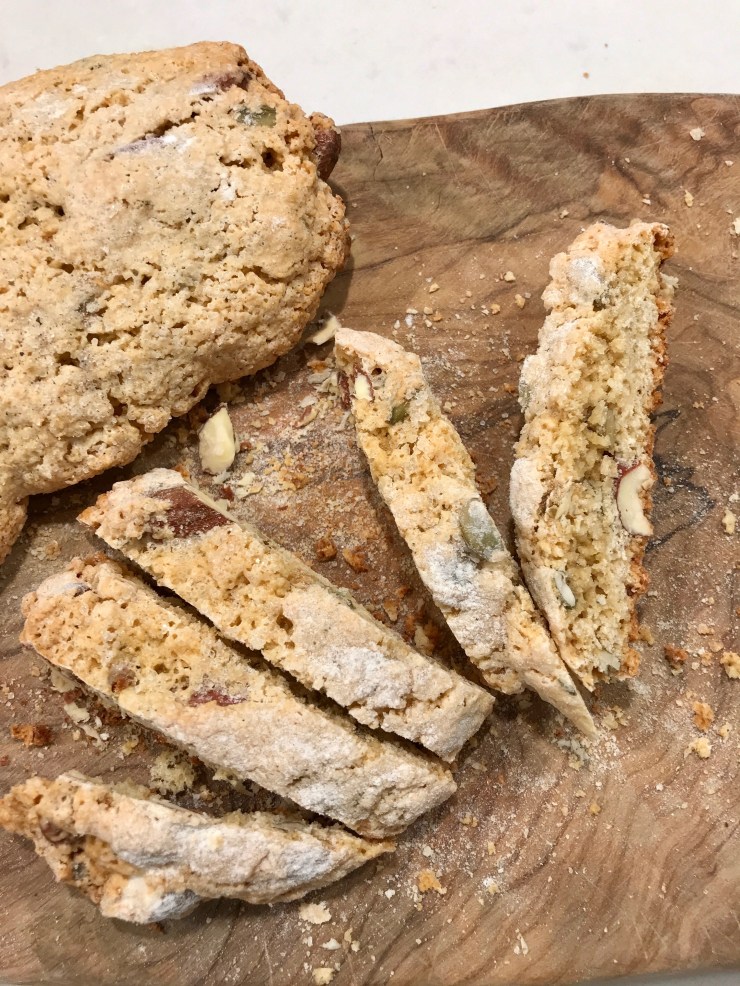
Because I want flavour. Whole spices that are crushed or ground right before use, release essential oils full of oomph. And oomph is what I have planned for this special little biscotti packed with toasted almonds and pumpkin seeds, filled with organic flours, eggs, sugar and vanilla then made perfect thanks to cardamom in the batter. I finish each and every log of biscotti dough with a sparkle of cardamom sugar.
Just a pinch will do it.


Cardamom Biscotti
I really can’t live in a house without biscotti. They are my go-to cookie and a welcome gift to friends and family . Thanks to the double bake, they store for weeks, even months in a closed glass container and travel well on airplanes and road trips.
Biscotti Batter:
1 cup whole, raw almonds
½ cup pumpkin seeds
1 ¼ cup organic all purpose flour
1 ¼ cup organic soft whole wheat flour
1 1/4 cups organic granulated sugar
2 tsp baking powder
1 tsp ground cardamom
1/2 tsp salt
4 large eggs
3 tsp vanilla
The Finishing Touches:
1-3 tbsp flour (for rolling out logs)
½ tsp ground cardamom
1 tbsp organic granulated
Preheat oven to 350 ° F.
To toast almonds, arrange on a baking sheet and bake for 5 minutes. Add pumpkin seeds to the sheet and bake another 5 minutes. Allow nuts and seeds to cool completely.
In a large bowl, combine flours, sugar, baking powder, cardamom and salt. Use a whisk to mix thoroughly.
Whisk eggs and vanilla in bowl of an electric mixer until frothy. Use the paddle attachment to mix in flour and sugar mixture. As soon as the dough clumps around the paddle, add toasted almonds and pumpkin seeds and mix until just combined.
Dust countertop with flour. Line two large baking sheets with parchment paper.
Spoon out one quarter of the sticky dough, dust lightly with flour and working quickly, roll into a 8-10 inch log. Transfer log to baking sheet. Repeat 3 times.
In a small bowl, mix sugar and cardamom. Sprinkle over logs with pinched fingers.
Bake for 30 minutes or until biscotti logs are golden and firm. Completely cool logs on a rack for at least 30 min. Using a serrated knife, cut crosswise into 3/4 inch wide slices. Arrange cut side down on baking sheets and return to 350 oven for 10-15 minutes or until golden-brown and crisp.
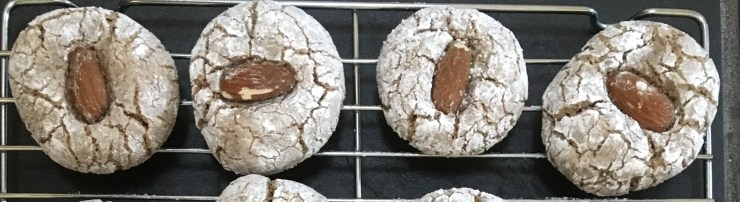
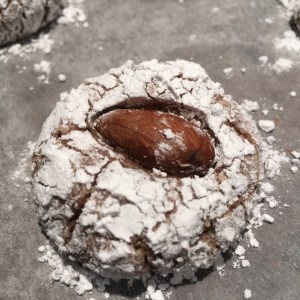 Full disclosure: I have a thing for amaretti. They are classic among Italian sweets and like most classic things, vary wildly from cook to cook, region to region. I’d made it my calling to sample them all, be it fresh from a bakery or ripped out of a supermarket package. Yet all the recipes I’d baked were abysmal. I was resigned to never finding my dream amaretti recipe until that fateful day in Rocca’s kitchen.
 Rocca delivered it the next day in a text, taking a photo of Lucy’s typewritten recipe. It was short and sweet. Only five lines of ingredients and a very brief sentence of instruction below. The title read “Almond Cookies.”
 “Oh, throw in a teaspoon of baking powder,” said Rocca flippantly. Were these Puglian sisters in collusion?! What other ingredients were somehow missing in this recipe meant for mangiacake me?
 “Be careful,” said Rocca, relieving my paranoia slightly. “The almond flour is not cheap. I was so shocked the first time I bought it: Fourteen dollars! And don’t buy blanched flour. Whole almond flour tastes best.”
 As to the cocoa powder, the taste is negligible. The cookie batter is dark but bakes out into a light brown cookie. This single teaspoon seems to counter that entire bottle of extract.

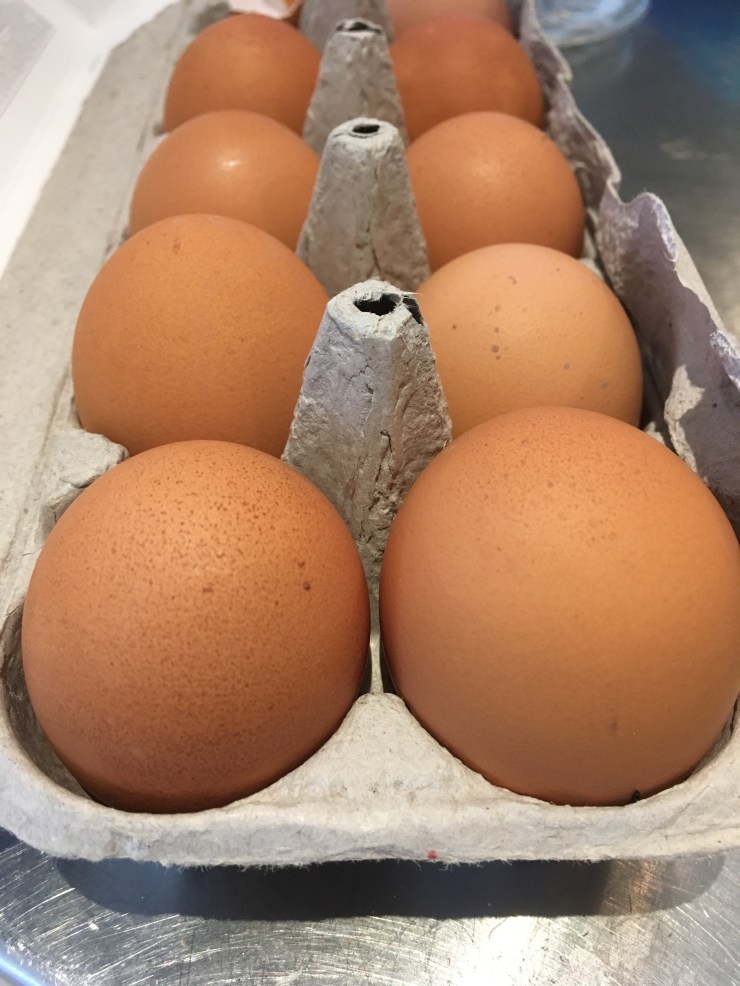
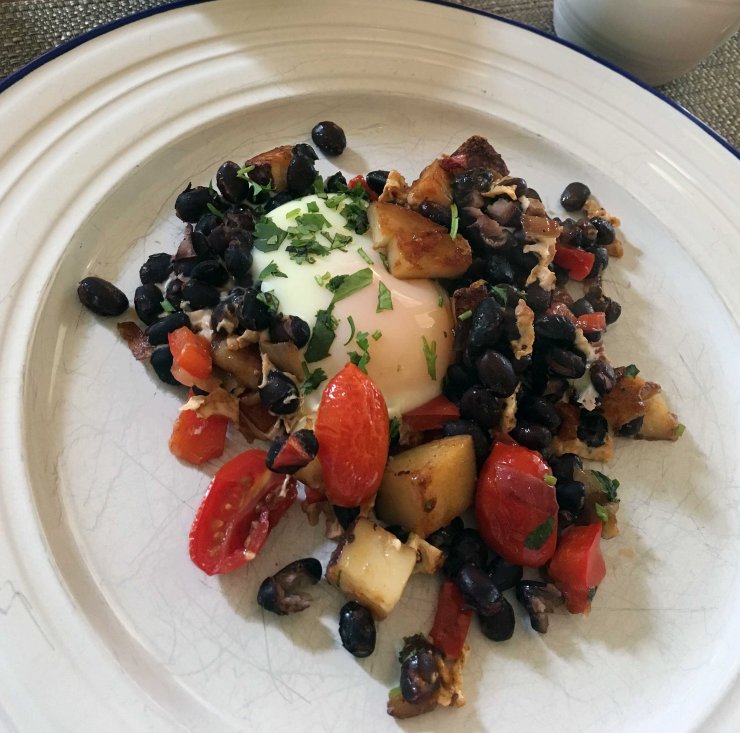
 Truth be told, my problem was the eggs. I really didn’t like them plain. If I’d practiced with a bowlful of very frothy, very beaten eggs, and had let them slide into a buttery, perfectly heated cast iron pan, they might have had a chance. They just needed time and singularity, so their eggy selves could focus on setting rather than accommodating all those interlopers.
 So I moved over to poaching. Again, I was saved by a gizmo. This time it was my grandmother Nonnie’s poaching pan, a lovely deep, copper bottom saucepan fitted with a rack in which four egg saucers nestle inside. One fills the pan with water, covers with the egg rack and follows with a lid. Once the water comes to a boil, the hot little saucers are ready to be buttered and loaded with a freshly cracked egg.

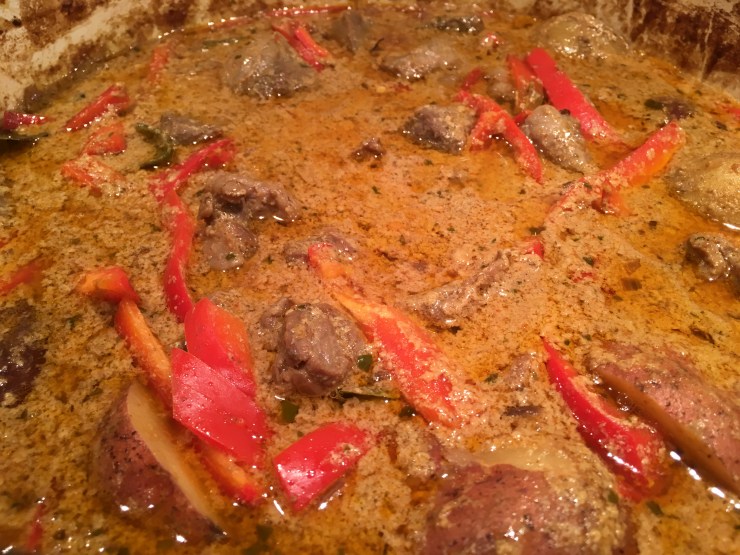
 for this because it contains lamb-loving turmeric and other warm spices like cinnamon and cloves. This is a curry that must include potatoes and I was happy to toss in three different organic varieties, starring a dark, red-skinned beauty with deep purple flesh. Lots of green herbs should swim through every Thai curry. I always keep a stash of lime leaves in my freezer and wished I had fresh Thai basil to toss in, too. I improvised with half a frozen cube of homemade basil pesto and was happy with the results.
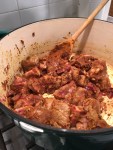 layer of parchment paper tucked over the curry before it is lidded. The parchment paper layer prevents any drop of fragrant moisture from leaving this slow-cooked beauty. Just before serving, I brighten these heavy flavours with tamarind paste, fresh mint and coriander. Cooking time varies depending on the cut of lamb and whether it contains bones or not. Don’t stop braising until the meat is fork tender. Enjoy!

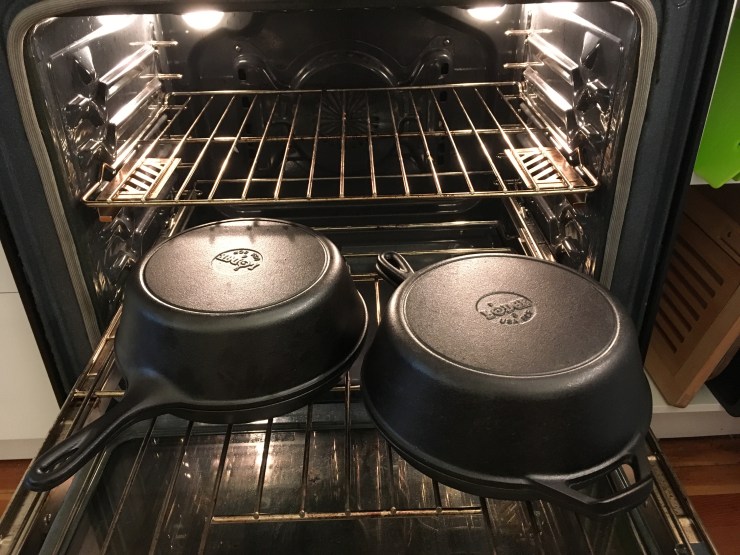 Dutch ovens or Lodge Pan combo cookers: When Jim Lahey of Sullivan St Bakery published his
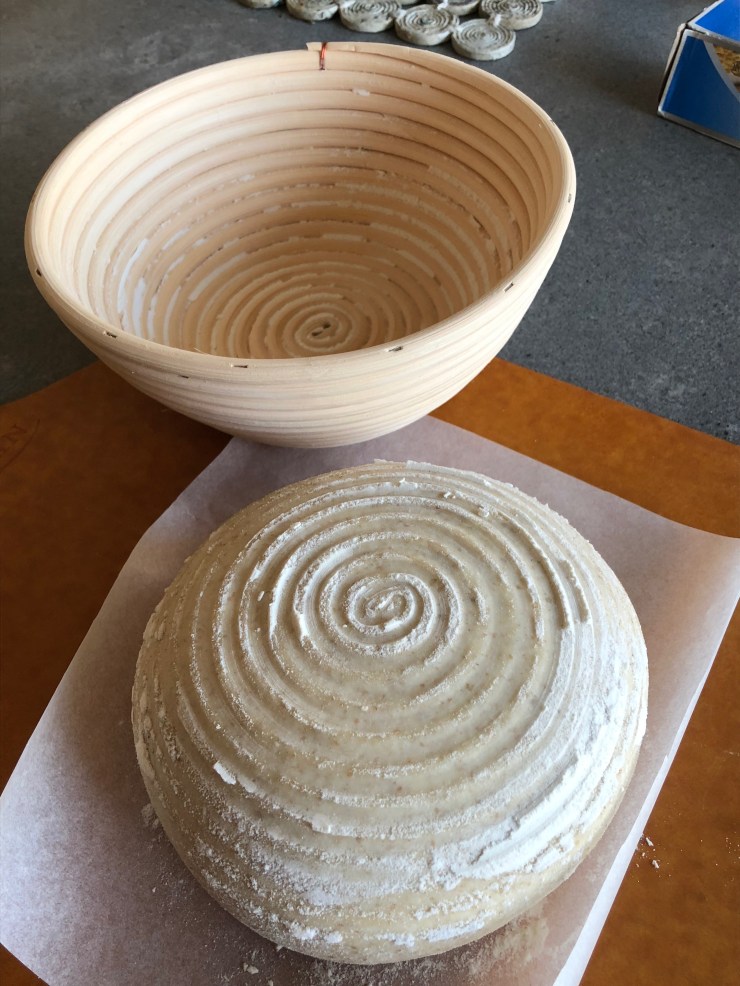
  Bannetons and baker’s linen: Artisanal bread dough is risen in baskets to preserve the shape and to create a pretty swirling flour pattern on the finished crust. You plunk the shaped loaf in bottom-side-up, let it rise, then place a parchment-paper-lined paddle or rimless baking sheet over it and flip the loaf back over, right side up. I dust my bannetons liberally with rice flour which prevents sticking and also creates nice, white contrasting lines on the finished crust. I never wash my bannetons, because moisture encourages mildew. I use a natural bristle brush to clean the bannetons and store them in a dry, airy cupboard. Round bannetons should be no wider than eight to nine inches in diameter or your loaf will be too big for the combo cooker. Another option is baker’s linen liners that can be fit over medium sized bowls.
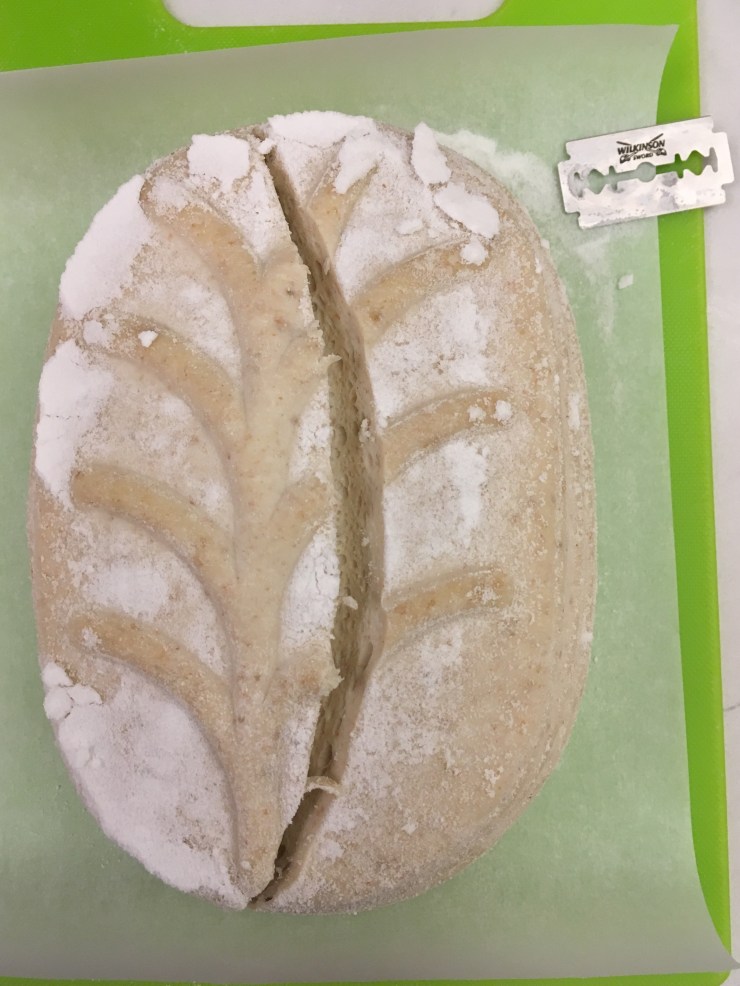 Razor blades and lamés: Just before your risen dough goes into the oven, it is time to score. A score allows hot air to emit during the bake without tearing open the crust. Bakers traditionally scored loaves in distinct patterns but nowadays it has become an art. The angle and depth of a score will affect the final shape of the loaf. I like to hold a slightly curved sharp blade between my thumb and index finger but others like to use a handle for the razor called a lamé. A sharp, serrated knife can do the trick, too.
 Digital scale: I cannot bake without a scale, I am so used to weighing versus measuring flour, starter and water. You need a scale that can “tare” back to zero so that you can put an empty bowl on the scale, tare to zero, add a pound of flour and tare back to zero, add 8 ounces of water and tare back to zero and so on. Zyliss makes a light, flat scale about the size of an Ipad.
 Just three ingredients: Flour, water and salt: Organic flour makes a big difference. I buy unbleached organic hard white flour by the 10 kg bag and am happiest when it is locally milled and has a date stamp to guarantee freshness. Locally grown, freshly milled whole rye, kamut, spelt and red fife all make incredible sourdough bread.
 Salt. Avoid iodized salt and choose sea salt. I like the big bags of coarse grey French salt from Ile de Noirmoutier that I found at Thrifty’s.
 Mado Food